
‘Ike i ke au nui me ke au iki
Knows the big currents and the little currents.1

The Navigator card is like the iris and bridges Hanafuda card. The upright iris is a Japanese symbol of the warrior spirit. The long leaves of the iris resemble sword blades. The ‘a‘ali‘i kūmakani plant in the Navigator card is a symbol of strength, like the iris. The Hawaiian saying, “He ‘a‘ali‘i kū makani mai au; ‘a‘ohe makani nana e,” means, “I am the wind resisting ‘a‘ali‘i; no gale can push me over.”2 This is a boast of strength comparing oneself to the ‘a‘ali‘i plant which has deep roots and resists wind and storms when other trees are uprooted and fall over.

The iris and bridges card is a reference to a chapter from The Tale of Ise—a collection of poems from 10th century Japan. The chapter is about a member of the Imperial Court in Kyoto who was assigned to a new post far to the east. He dutifully went to his new assignment and left his family behind in the capitol.
The journeying court official comes to a field of irises that is divided by eight streams. Each stream is crossed by a bridge. He takes a rest from his journey and composes a poem to express his yearning for his beloved wife. As long as he holds her in his heart, his wandering journey through distant lands will lead him back to her.
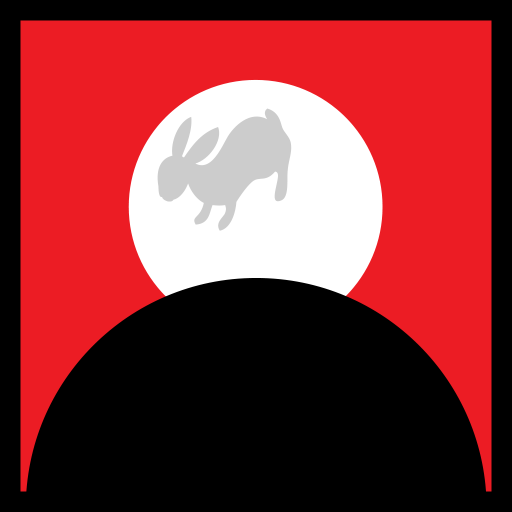
The Navigator stands on the peak of Kaho‘olawe visualizing his destination, and manifesting his journey. He seeks the knowledge and skills of his ancestors. He sees that when you can clearly know your destination all paths lead toward it.
The eight bridges in the field of irises are like the channels between the eight main Hawaiian Islands. Indigenous Pacific islander navigators considered the ocean to be a great unifying medium that connects all of the Pacific islands and not a barrier that separates them.
The Navigator is guided by concentration.
Kaho‘olawe is a small island south of Maui. Hawaiian navigators were brought to the peak of this island to learn the art of using stars to guide them on voyages. Five major islands are visible from the peak of Kaho‘olawe. O‘ahu can be seen in the northwest, Lāna‘i, Molokai, and Maui to the north, and Hawai‘i island toward the southeast.
Navigators in training spent the days learning the currents between islands, and how to read the weather by observing the wind and clouds. At night, they learned to recognize the names, and paths, of the stars. The Navigator internalizes the motions of all the heavenly bodies. He knows where he is in relation to the moon and stars during the day, and the sun at night.
The Navigator spends a lifetime in the ocean attuning his senses to the waves and currents through his piko, his center. He learns to feel the difference between the short local waves, generated by the wind and weather, and the long waves, generated by the currents of the deep ocean. He learns how the islands block, reflect, and refract waves. His concentration and training allow him to feel islands in the ocean from a hundred miles away. He can read the clouds and winds to predict weather conditions days in advance.
The Navigator observes the behavior of animals. He can tell the location of an island by observing when and to where different kinds of birds fly. He knows the behaviors of a multitude of sea life.
Traditional Polynesian navigation uses the sun and stars as a compass to determine direction. The paths of star constellations can determine latitude by recognizing which constellation passes directly overhead at midnight. Longitude was determined by the navigator continually tracking the heading and speed of his vessel in his head throughout the voyage. The navigator never really slept while he was navigating. When the vessel arrives within a few hundred miles of the destination islands, the navigator can find the exact location by feeling the way islands change the ocean currents. Other signs like birds and cloud formations point to islands.3
The Navigator is focused. The Navigator’s purpose is to point the way. The traditional Hawaiian navigator does not use measuring tools or maps to find the way. His body is a compass and calendar. The Navigator’s skill is always knowing his position relative to the Earth and stars. He finds his destination by visualizing it and always pointing his vessel toward it. His concentration is the map that always points him toward his destination.
The ability to focus for an extended period of time can result in extraordinary abilities. The Navigator represents a life dedicated to the deep and wide knowledge that guides him. The Navigator is not only focused on his destination, he’s aware of his surroundings. He knows how to move through life to reach his goals.
Concentration requires practice. Consistent practice will train the body and mind to act together to perform with excellence. The Navigator’s focus and concentration allows him to master the sea, and have mastery of living life.
Concentration is like a deep root that anchors the ‘a‘ali‘i tree. The root is hidden, and its strength may only show when tested. Concentration brings together the Navigator’s awareness of his surroundings, his ability to interpret the signals around him, and the skill to move along a course toward his goal.
We are all navigators in our life journeys. Like the vast ocean, there are no roads or borders to guide us in life. Like the Navigator who always knows his position relative to the sun and stars, we all must concentrate on our internal compass to develop a sense of self, to know what we believe, and recognize our strengths and weaknesses. When we know ourselves our life path will be revealed.
Footnotes
- Mary Kawena Pukui, ‘Ōlelo No‘eau Hawaiian Proverbs & Poetical Sayings (Honolulu: Bishop Museum Press, 1983) #1209 ↩︎
- Pukui, ‘Ōlelo No‘eau #507 ↩︎
- for more a more detailed description of star navigation read: https://hokulea.com/the-star-compass-by-nainoa-thompson/ ↩︎
Leave a Reply